National Trust - 2025.
The National Trust is Europe's largest conservation charity. Operating in England, Wales, and Northern Ireland (with a separate but affiliated National Trust for Scotland), its mission is to preserve and protect historic properties, coastlines, and open spaces for everyone to enjoy. The Trust owns and manages over 500 significant sites, including stately homes, ancient monuments, castles, and historic gardens. It is one of the largest landowners in the UK, caring for hundreds of miles of coastline (e.g., the White Cliffs of Dover), nature reserves, woodlands, and countryside.
The charity is largely funded by its millions of members. Paying for an annual National Trust Membership grants you free entry to all of their managed properties, free car parking at most locations, and supports their ongoing conservation efforts.
I was lucky enough to be gifted a National Trust membership for a year. Here is a brief outline of my visits for 2025.
Lyme Park
Lyme Park is a magnificent 1,400-acre estate on the edge of the Peak District in Cheshire, managed by the National Trust. Famous for its medieval herd of red deer, sweeping moorland views, and starring role as the filming location in the BBC's Pride and Prejudice, the estate is easily accessible and offers an ideal blend of history and nature.
Lyme is the largest house in Cheshire, boasting six centuries of history. Originally an Elizabethan hunting lodge, it was transformed into an Italianate palace and Regency mansion by the Legh family, who owned the estate from 1398 to 1947.
I visited in January 2025, where it was still done up for Christmas.

Kedleston Hall
Kedleston Hall is a spectacular 18th-century country house and estate in Derbyshire. Designed by renowned architect Robert Adam, this neoclassical showplace features opulent state rooms, an Eastern Museum, and 800 acres of historic parkland.
Built in the 1760s for Nathaniel Curzon, 1st Baron Scarsdale, the house was intended to rival the grandeur of ancient Rome. It features a sweeping Palladian exterior and iconic interiors, including the awe-inspiring Marble Hall.
This visit was in April 25.


Calke Abbey
Calke Abbey, located in Derbyshire, is a unique National Trust estate famous for its "un-stately home" presentation. Rather than restored grandeur, the Baroque mansion and its vast, quirky collections of natural history are preserved in a fascinating state of gentle decline. The Baroque mansion was built between 1701 and 1704 and owned by the Harpur family for nearly 300 years. It was handed to the National Trust in 1985. Many rooms—complete with peeling wallpaper and undisturbed clutter—are intentionally left just as they were found.
I visited this place in April 25.

Hardwick Hall
Hardwick Hall is a spectacular Elizabethan country house in Derbyshire, built in the late 1500s by Bess of Hardwick. Renowned for its towering glass windows, magnificent tapestries, and sprawling parkland, it is famously recognised as Malfoy Manor in the Harry Potter films.
This was also visited in April 25.

Rutherford Old Hall
Rufford Old Hall is a spectacular Tudor manor located in Lancashire. Built around 1530 for the ancient Hesketh family, it is renowned for its surviving wooden Great Hall, period furnishings, and the legend that a young William Shakespeare once performed here. The Great Hall is the crown jewel of the estate. It features a rare 16th-century carved oak screen and a striking hammerbeam roof unique to Lancashire architecture.
This visit was done in May 25.


Quarry Bank Mill
Located in Styal, Cheshire, Quarry Bank is one of the world's best-preserved Industrial Revolution communities. The Main Mill was built in 1784 by Samuel Greg. A restored waterwheel and historic steam engine power this massive rural cotton-spinning mill. Visitors can see restored, working heritage machinery in action and feel the original factory floors shake. The elegant Georgian residence of the Greg family overlooks the river. Visitors can contrast the opulence of the owner's lifestyle with the lives of the mill workers and stroll through the picturesque, restored upper gardens and curvilinear glasshouses.
This visit was in May 25.


Gawthorpe Hall
Gawthorpe Hall is an Elizabethan country house located in Padiham, near Burnley, Lancashire. Affectionately known as "the Downton of the North," this Grade I listed building was originally constructed between 1600 and 1605 for the Shuttleworth family. Today, the estate is owned by the National Trust and jointly managed alongside Lancashire County Council. The Grounds surrounding 40 acres of woodland and gardens are free to access and are open daily from 8:00 AM to 7:00 PM. Visitors can enjoy views of Pendle Hill, formal kitchen gardens, riverside walks along the River Calder, and a dedicated natural play area for children
The house has rich literary ties; Charlotte Brontë frequently visited it and it serves as the final stop on the long-distance Brontë Way walking route. It also served as the primary inspiration and setting for Stacey Halls' bestselling 2019 novel, The Familiars.
May 2025


August came around, and we took in 3 National Trust properties.
Blickling Hall
Blickling Hall is a stunning Jacobean stately home in Norfolk, England, renowned for its red-brick architecture, extensive historic library, and deep ties to the Boleyn family. The estate was historically the home of the Boleyn family and is traditionally considered the birthplace of Anne Boleyn, Henry VIII's ill-fated second queen.
The current hall was built between 1616 and 1627 by architect Robert Lyminge for Sir Henry Hobart, offering a pristine example of Jacobean architecture with delicate plasterwork and ogee domes. The Library, considered one of the most historically significant country house collections in England, holds over 12,500 volumes and is the largest book collection cared for by the National Trust.


Horsey Wind Pump
Horsey Windpump is an iconic 1912 drainage mill in Norfolk, England. Carefully restored by the National Trust, it offers panoramic views of the Broads. Built in 1912 on the foundations of a 1797 black mill, it was used to drain the surrounding flooded marshes into Horsey Mere. The mill was struck by lightning and damaged by severe storms, lying silent for decades until an extensive, multi-phase restoration project brought the cap and sails back to life.
Visitors can ascend the multi-story windpump. On designated days (weather permitting), climbing to the balcony rewards you with spectacular, expansive views over the surrounding broadlands and coastline. Situated where the Broads meet the coast, it is a gateway to diverse wetlands and to a well-known 1.2-mile walk to Horsey Gap, famous for its large seal colony.

East Riddlesden Hall
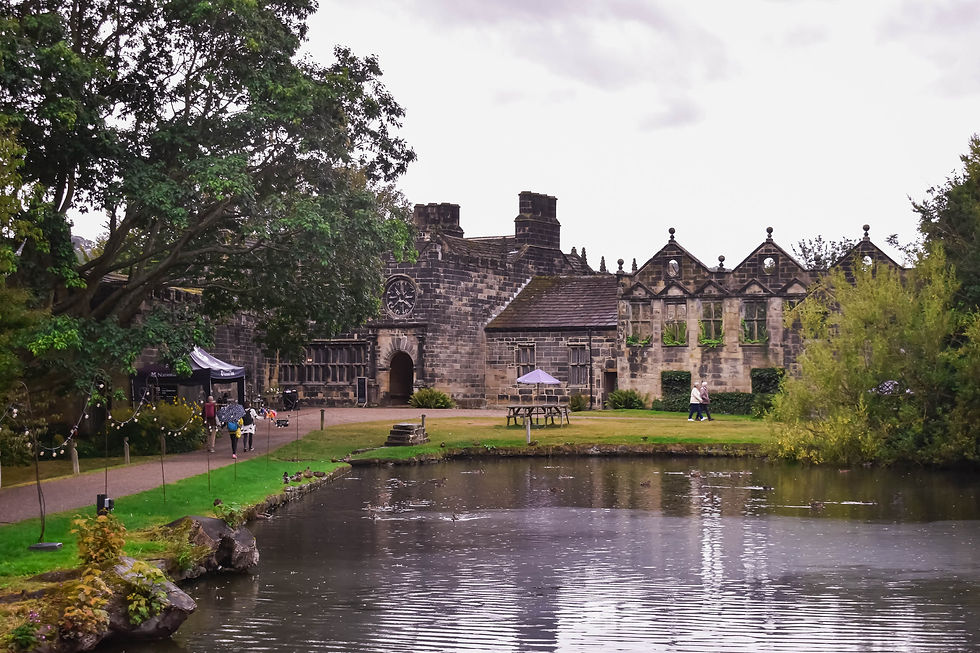
Located in Riddlesden, Keighley, West Yorkshire, East Riddlesden Hall is a 17th-century National Trust manor. Built in 1642 by clothier James Murgatroyd, it features a Great Hall, a rare medieval tithe barn, and peaceful riverside gardens. Saved from demolition in 1934, it now offers a family-friendly, historic day out.
Features include a tearoom, a gift shop, and a Discovery Garden with an outdoor mud pie kitchen for children. The house was nearly demolished in the early 20th century. Still, it was saved by two local brothers, William and John Brigg, who bought the interior fittings and eventually the Hall, donating it to the National Trust in 1934.
It is a Grade I listed building featuring a two-story porch, Yorkshire Rose windows, and the ruins of the Starkie wing.

Speke Hall
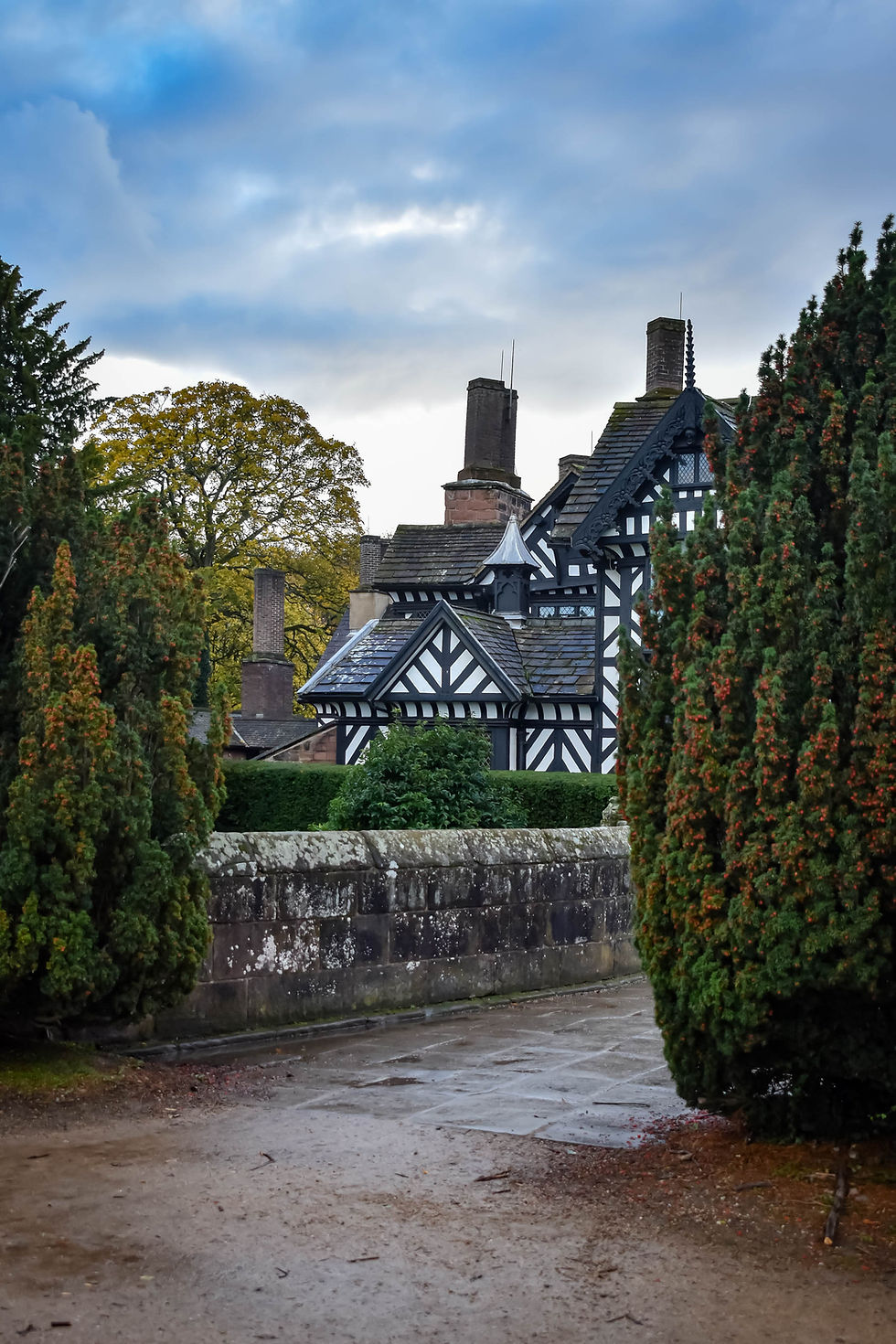
Speke Hall is a rare, timber-framed Tudor manor in Liverpool, England. Built by the Norris family in the 16th century and restored during the Victorian era, it is renowned for its wattle-and-daub architecture, "priest hole," and tranquil gardens.
The House features a unique central courtyard, finely carved 16th-century oak panelling, and Victorian Gothic Revival rooms accented with original William Morris wallpaper.

And that is that! Some very gorgeous buildings with very well-kept gardens are all well worth the visit.
Thank you as always for taking the time to read my blog, and I hope that you enjoy the photos.


Comments